
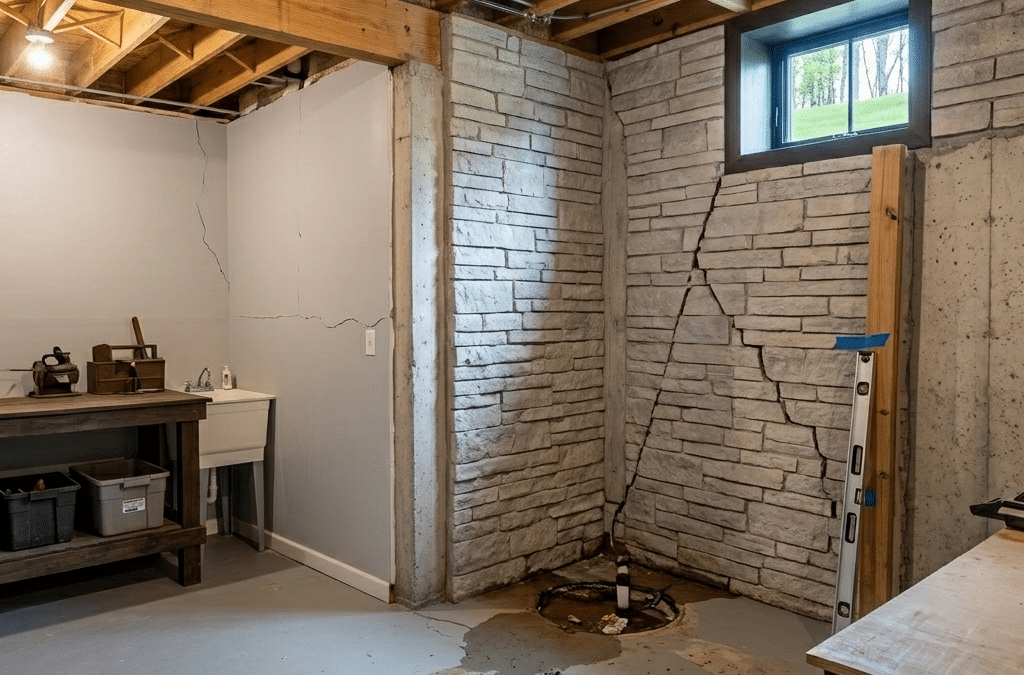
A basement wall that has bowed or tilted inward is a structural problem that gets worse over time, not better. The lateral soil pressure pushing that wall isn’t going anywhere — and neither is the damage unless the wall is actively stabilized or straightened. Understanding the available methods and when each one applies will help you make the right decision for your home.
Why Basement Walls Bow Inward
Basement walls bow because the lateral pressure from saturated soil outside exceeds the wall’s resistance. In central Indiana, clay-heavy soil absorbs water from spring rains and snowmelt and swells, exerting thousands of pounds of force per square foot against the foundation wall. Over time, that force wins — walls crack horizontally, deflect inward, and in severe cases, approach failure.
The rate of movement depends on soil conditions, drainage, and the wall’s construction. Block walls tend to bow more gradually. Poured concrete walls often hold longer but can fail more suddenly when they go. Either way, inward movement measured in inches — not fractions — signals a situation requiring immediate professional attention.
The 2-Inch Rule: Why It Matters
Foundation professionals commonly use 2 inches of inward deflection as a threshold. Walls with less than 2 inches of bowing can typically be stabilized effectively with less invasive methods. Walls beyond 2 inches of deflection require more aggressive intervention, and walls approaching 3 inches or more may have limited straightening potential and carry higher risk of further failure.
Getting a professional assessment early — before that threshold is reached — dramatically expands your repair options and reduces your costs.
Wall Straightening and Stabilization Methods
Carbon Fiber Straps
Carbon fiber straps are bonded vertically to the wall surface and anchored at the top and bottom, creating a tension system that resists further inward movement. Carbon fiber does not actively straighten a wall — it stops it from moving further. It’s the right choice for walls with less than 2 inches of deflection and no active progression. Low-profile, no excavation, installed in a single day.
Wall Anchors
Wall anchors consist of a steel plate on the inside of the basement wall, connected by a rod through the soil to a buried anchor plate in the yard. They halt movement immediately and, importantly, can be gradually tightened over time as soil conditions allow — creating the opportunity to recover some of the wall’s original position. Effective for walls with moderate to significant deflection.
Steel I-Beam Bracing
Floor-to-ceiling steel I-beams are installed against the inside of the wall, transferring the lateral load to the floor slab and the floor joist above. This method is strong and reliable but does reduce usable floor space. Best suited for walls with significant deflection or walls that have progressed beyond the range of carbon fiber.
Exterior Excavation and Wall Rebuilding
For walls that have moved severely or are in danger of structural failure, excavation is the solution of last resort. The soil is removed from outside the wall, the wall is rebuilt or re-supported, drainage is installed, and the area is backfilled. This is the most expensive and disruptive option and is typically avoided when earlier intervention was an option.
Can a Bowed Wall Actually Be Straightened?
Full straightening — returning a bowed wall to perfectly plumb — is rarely achieved and rarely necessary. The goal of wall straightening is to halt active movement, recover some position if possible, and permanently stabilize the structure. Wall anchors offer the best potential for gradual recovery over time. Carbon fiber and I-beams prioritize stabilization over recovery.
What matters most is that the movement stops completely and that the repair is permanent. A wall that has been stabilized and warranted will never be the emergency it was heading toward.
Central Indiana Homeowners: Don’t Let a Bowing Wall Wait
Across Indianapolis, Carmel, Fishers, Noblesville, and Greenwood, bowing basement walls are among the most common foundation issues we see — driven by seasonal clay soil pressure that accumulates year after year. The earlier the intervention, the more options you have and the lower the cost.
Trusted Foundation Solutions offers free inspections throughout central Indiana. We measure the deflection, assess the rate of movement, and recommend the right method for your specific wall — backed by our satisfaction guarantee and lifetime warranty.
📞 Call us today or fill out our contact form to schedule your free inspection. A bowing wall only moves in one direction without intervention — let’s stop it.
Trusted Foundation Solutions proudly serves Indianapolis, Carmel, Fishers, Noblesville, Greenwood, and communities throughout central Indiana.