
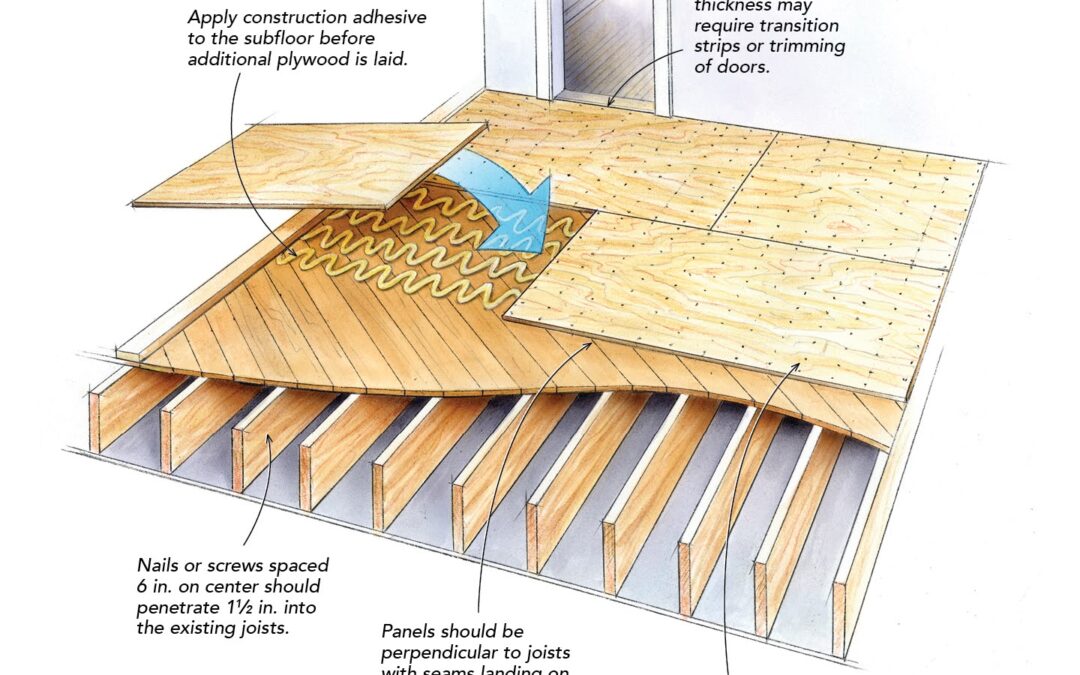
What Are Bouncy, Uneven Floors?
Bouncy, uneven floors describe flooring that feels soft, springy, sloped, or unstable when you walk on it. You may notice dips in certain areas, furniture that rocks, or vibrations when someone else walks through the room.
For homeowners with crawl space issues this problem is especially common. Because the floor system sits directly above the crawl space, any moisture, rot, or structural weakness below can quickly translate into movement above. While the issue may seem minor at first, bouncy, uneven floors are often an early warning sign of deeper structural concerns.


Why Crawl Spaces Play a Major Role
Crawl spaces support your home’s floor system through a network of joists, beams, and support piers. When the crawl space environment is healthy and well supported, the floors above remain solid.
Problems begin when moisture, poor construction, or soil movement affect these supports. Because crawl spaces are often out of sight, damage can progress for years before homeowners notice issues inside the home.
Common Causes of Bouncy, Uneven Floors
Moisture and Humidity in the Crawl Space
Excess moisture is the leading cause of crawl space-related floor problems. High humidity leads to wood rot, mold growth, and weakened joists. Over time, this causes floors to lose rigidity and bounce under normal foot traffic.
Damaged or Undersized Floor Joists
Older homes may have joists that were undersized for modern loads. In other cases, joists become cracked, rotted, or warped due to moisture exposure, reducing their ability to support weight.
Failing Support Piers and Beams
Crawl space piers can settle into the soil or deteriorate over time. When this happens, beams lose support, and floors above begin to sag and bounce.
Soil Settlement Beneath the Crawl Space
Poor soil conditions or prolonged moisture can cause the ground beneath support piers to shift. This uneven settlement directly contributes to bouncy, uneven floors.


Warning Signs Homeowners Should Watch For
- Floors that feel springy or shaky
- Noticeable dips or slopes in rooms
- Cracked tiles or separating floor seams
- Doors that no longer close properly
- Musty odors indicating crawl space moisture
These symptoms often worsen over time if the underlying cause is not addressed.
Are Bouncy, Uneven Floors Dangerous?
While bouncy, uneven floors may not seem immediately dangerous, they can pose safety risks. Increased movement raises the likelihood of trips and falls and may indicate structural weakening below.
More importantly, these floors often signal ongoing crawl space damage that can eventually affect walls, doors, and even the foundation if left untreated.
How Professionals Diagnose the Problem
A proper diagnosis includes a full crawl space inspection. Professionals examine:
- Moisture levels
- Condition of joists and beams
- Stability of support piers
- Soil conditions
This comprehensive approach ensures repairs address the root cause, not just the symptoms.
Best Repair Solutions for Crawl Space Floors
Crawl Space Encapsulation
Encapsulation seals the crawl space with a vapor barrier, controlling moisture and preventing future wood damage. This is often the foundation of long-term repair.
Joist Repair and Reinforcement
Damaged joists may be reinforced with sister joists or replaced entirely to restore floor strength and stiffness.
Support Pier Installation
Installing new adjustable steel or concrete piers stabilizes beams and lifts sagging areas, eliminating bounce and uneven sections.
How to Prevent Floor Problems in the Future
- Control crawl space moisture
- Ensure proper drainage around the home
- Inspect crawl spaces annually
- Repair minor issues before they worsen
Prevention keeps floors stable and extends the life of your home’s structure.
FAQs About Bouncy, Uneven Floors
- Are bouncy floors normal in older homes?
Some movement is common, but noticeable bounce usually indicates a problem. - Can crawl space moisture really affect floors?
Yes. Moisture is the leading cause of weakened floor systems. - Will new flooring fix the problem?
No. Structural issues must be repaired first. - Do bouncy floors always mean foundation issues?
Not always, but crawl space support problems are common. - How long do repairs take?
Most crawl space repairs take 1–3 days. - Will fixing the crawl space improve home value?
Yes. Stable floors and a dry crawl space are major selling points.
Conclusion: Restore Stability From the Ground Up
Bouncy, uneven floors are not just an inconvenience, they are a clear signal that something is wrong in your crawl space. For homeowners facing crawl space issues, addressing moisture, support, and structural integrity early can prevent serious damage and costly repairs.
By fixing the problem at its source, you can restore solid, level floors and protect your home’s long-term stability and value.