
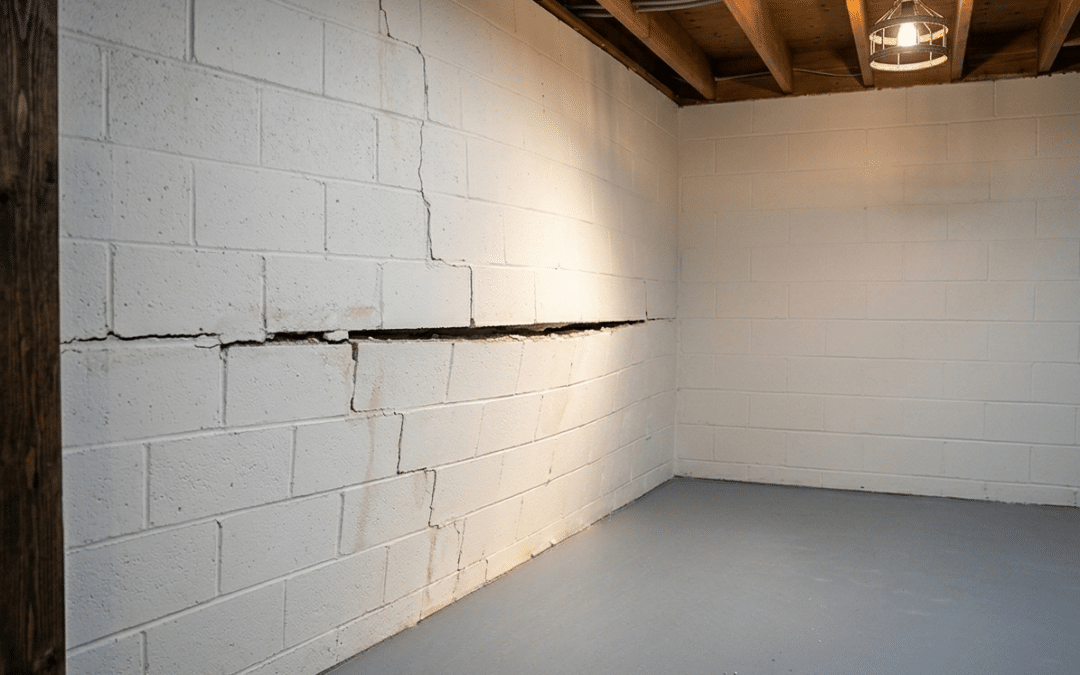
A bowed basement wall is not a cosmetic issue. It’s a structural wall under active pressure — deflecting inward because the force of the soil outside is exceeding the wall’s resistance. Every inch it bows is one inch closer to failure. And unlike most home problems that can wait for a convenient time to fix, a bowing basement wall is one that gets harder and more expensive to repair the longer it’s left alone.
What Causes Basement Walls to Bow?
Basement walls bow when lateral soil pressure overcomes the wall’s structural capacity. Several factors accelerate this process in central Indiana:
- Expansive clay soil — absorbs water, swells, and pushes hard against walls every wet season
- Hydrostatic pressure — water-saturated soil exerts enormous force against below-grade walls
- Freeze-thaw cycles — water in the soil freezes and expands repeatedly through Indiana winters, ratcheting up pressure with each cycle
- Poor drainage — soil that stays wet longer exerts sustained pressure rather than seasonal spikes
- Age — older walls (especially block or brick) lose strength over time as mortar deteriorates
- Surcharge loads — heavy equipment, vehicles, or structures near the foundation add pressure to the soil pressing against the wall
How to Tell If Your Basement Wall Is Bowing
Some bowing is visible to the naked eye. Other cases require measurement. Signs that your wall may be bowing:
- Horizontal crack running across the middle third of the wall — the clearest structural warning sign
- Wall visibly curving inward when viewed from the side
- Gap forming between the wall and floor joists above
- Stair-step cracks in block walls as blocks shift independently
- Wall feels different — knocking reveals a hollow sound in areas that were previously solid
- Doors near the affected wall becoming difficult to open or close
How Serious Is It? The Deflection Assessment
A straight edge or string line held against the wall reveals deflection — the distance the wall has moved from its original plumb position. This measurement drives the repair decision:
- Less than 1 inch: Stabilization with carbon fiber is typically effective; movement can be halted cleanly
- 1–2 inches: Carbon fiber or wall anchors; wall anchors offer the possibility of future gradual recovery
- 2–3 inches: Wall anchors or steel I-beam bracing required; urgency increases significantly
- More than 3 inches: Immediate professional assessment essential; risk of accelerated failure
Repair Options for Bowed Basement Walls
Carbon Fiber Straps
High-strength carbon fiber straps bonded to the wall surface and anchored top and bottom permanently halt further inward movement. They don’t straighten the wall, but they stop it cold. Best for deflection under 2 inches with no active progression.
Wall Anchors
An interior wall plate connects via rod through the soil to an exterior buried anchor plate. The system stops movement immediately and, as soil conditions change seasonally, can be tightened gradually to recover position over time. Effective across a wider range of deflection than carbon fiber.
Steel I-Beam Bracing
Floor-to-ceiling steel beams transfer lateral load from the wall to the floor system, bracing the wall in place. Reliable and strong for significantly compromised walls, though they occupy floor space.
What Happens If You Don’t Fix a Bowed Wall?
Left unaddressed, a bowing basement wall continues to deflect inward. Water intrusion through the horizontal crack increases. The crack widens. The deflection accelerates. At some point — sooner than most homeowners expect — the wall moves from structural concern to structural failure. At that point, options narrow and costs rise significantly.
Central Indiana Homeowners: The Wall Isn’t Going to Straighten Itself
In Indianapolis, Carmel, Fishers, Noblesville, Greenwood, and across central Indiana, bowing basement walls are a direct result of the region’s clay soil and seasonal weather patterns. We see them constantly — and we see the difference between walls caught at 1 inch of deflection and walls that arrive at 3 inches.
Trusted Foundation Solutions offers free inspections throughout central Indiana. We’ll measure the deflection, assess the rate of movement, and recommend the right solution for your wall — backed by our satisfaction guarantee and lifetime warranty.
📞 Call us today or fill out our contact form to schedule your free inspection. A bowed wall is a structural emergency in slow motion — let’s stop it now.
Trusted Foundation Solutions proudly serves Indianapolis, Carmel, Fishers, Noblesville, Greenwood, and communities throughout central Indiana.