
What “Bowing” and “Buckling” Really Mean
A wall is bowing when it curves inward—usually in the middle—like a gentle “C” shape. A wall is buckling when it bends or deforms more dramatically, sometimes with visible bulges, offsets, or cracking patterns that suggest the wall is losing its ability to resist pressure.
Bowing vs Buckling vs Leaning
- Leaning: the whole wall tilts inward as a unit (top moves more than bottom).
- Bowing: the wall curves inward, often worst at mid-height.
- Buckling: the wall shows more severe deformation, sometimes with sections pushed inward unevenly.
Why Basement and Retaining Walls Are Most At Risk
Basement and retaining walls have a tough job: they hold back soil. When that soil gets heavy and wet, it can push with surprising force. FEMA notes that hydrostatic pressure and the weight of saturated soils can act on basement walls and slabs.
Why This Happens
Below are the most common drivers of inward wall movement. In many homes, it’s not just one cause—it’s a “combo meal.”
Walls Usually Fail From Sideways Pressure, Not “Old Age”
Concrete and masonry are strong in compression (bearing weight), but basement walls also have to resist sideways loads from soil and water. When loads exceed what the wall was designed for—or when those loads repeat season after season—cracks and inward movement can show up.
Water + Soil = The Pressure Problem
When soil becomes saturated:
- it gets heavier
- it holds water that pushes outward/inward (pressure)
- it can expand (especially clay)
That’s why many guidance documents emphasize drainage material and drains behind walls to relieve groundwater pressure.
The 9 Most Common Causes of Bowing and Buckling Walls
1) Hydrostatic Pressure from Saturated Soil
This is one of the biggest and most common causes. When water builds up in the soil outside a wall, it creates hydrostatic pressure that pushes inward. FEMA specifically describes hydrostatic pressure acting on walls and how saturated soils add to pressure on basement walls.
If water can’t drain away easily, pressure rises—especially after heavy rains, snowmelt, or long wet seasons. Over time, that repeated pushing can crack the wall and slowly move it inward.
2) Poor Drainage and Grading That Sends Water Towards The Foundation
If gutters overflow, downspouts dump water next to the house, or the yard slopes toward your foundation, you’re feeding the pressure problem. Even a small grading issue can keep soil wet for weeks.
3) Expansinve Clay Soils (Shrink-Swell Cycles)
Clay soil can swell when wet and shrink when dry. That constant push-and-pull stresses walls and can worsen cracking over time. Some wall and basement crack guides note that uneven side pressures and moisture-related forces can impact basement walls.
4) Freeze-Thaw and Frost Heave Pushing Laterally
In cold climates, water in soil can freeze and expand, pushing hard against foundation walls. Repeated freeze–thaw cycles can gradually weaken a wall and make movement more likely.
5) Backfill Soil That Wasn’t Compacted Properly
After a foundation is built, the soil around it gets “backfilled.” If it wasn’t compacted in a controlled way, it can settle and shift—sometimes creating uneven loads or allowing water pathways to form that keep the soil wet.
6) Heavy Surface Loads Near The Wall (Driveways, Patios, Equipment)
Large loads close to a foundation wall—like a driveway, patio slab, hot tub, or parked equipment—can increase lateral pressure. If the soil is wet at the same time, the force can be even worse.
7) Missing Or Failing Footing Drains/Weep Systems
Many basements rely on perimeter drains and drainage material to reduce water pressure. HUD’s rehab inspection guidance highlights that drains and drainage material behind walls help relieve groundwater pressure.
If those drains clog, collapse, or were never installed properly, water pressure can build.
8) Weak Wall Design or Inadequate Reinforcement For The Soil Conditions
Some walls weren’t built to handle the soil and moisture conditions they ended up facing—especially older block walls or walls with limited reinforcement. Concrete industry guidance discusses how climate conditions, unusual loads, and workmanship can affect basement wall performance.
9) Long-Term Water Intrusion Through Cracks
Once cracks form, water can enter more easily. That moisture can:
- keep soil and wall materials damp
- increase pressure cycles
- widen cracks

Warning Signs to Watch For (Before It Gets Worse)
You don’t need to be an engineer to notice patterns.
Horizontal Cracks, Stair-Step Cracks, and Bulging
- Horizontal cracks in basement walls are often a red flag because they can relate to lateral pressure.
- Stair-step cracks in block walls can indicate uneven movement or pressure.
- Bulging/bowing is the big visual sign—if you can see it, it’s worth evaluation.
Sticking Doors, Sloping Floors, and New Gaps
If the wall movement affects the structure above, you may also notice:
- doors that won’t latch
- sloping floors
- gaps between trim and walls
Water Seepage, Efflorescence, and Musty Odors
Water coming through cracks or seams is both a symptom and a multiplier. Persistent dampness can also raise indoor humidity and worsen comfort.
DIY Checks You Can Do Without Guessing
These quick checks help you gather facts (not fears).
Simple Measurements: Plumb Line, Straight Edge, Photos
- Hold a long straightedge against the wall to see if there’s a curve.
- Hang a plumb line (string with a weight) near the wall and measure the gap at top vs. middle.
- Take photos with a ruler for scale and date them.
Exterior Checklist: Gutters, Downspouts, Grading
- Clean gutters
- Extend downspouts away from the foundation
- Look for negative grading (soil sloping toward the wall)
- Watch where water goes during a heavy rain
Often, improving water control is a major first step because it reduces the force pushing on the wall.
Best Repair Solutions for Uneven Floors
Foundation Repair Methods
- Pier and beam adjustment
- Helical or push piers
- Slab lifting or stabilization
These methods address the root cause of Uneven Floors by stabilizing the foundation itself.
Floor Leveling Techniques
- Self leveling compounds
- Sistering floor joists
- Subfloor replacement
These are effective only when the foundation is stable.
Crawl Space and Joist Repairs
Replacing rotted joists, adding support posts, and improving ventilation can permanently fix Uneven Floors in crawl space homes.
Self leveling compound image
Repair Approaches (High Level, Homeowner Friendly)
Stabilize vs. Straighten: Realistic Goals
Many repairs focus on stopping movement (stabilization). Some also aim to reduce bowing over time. The best goal depends on how severe the movement is and how long it has been happening.
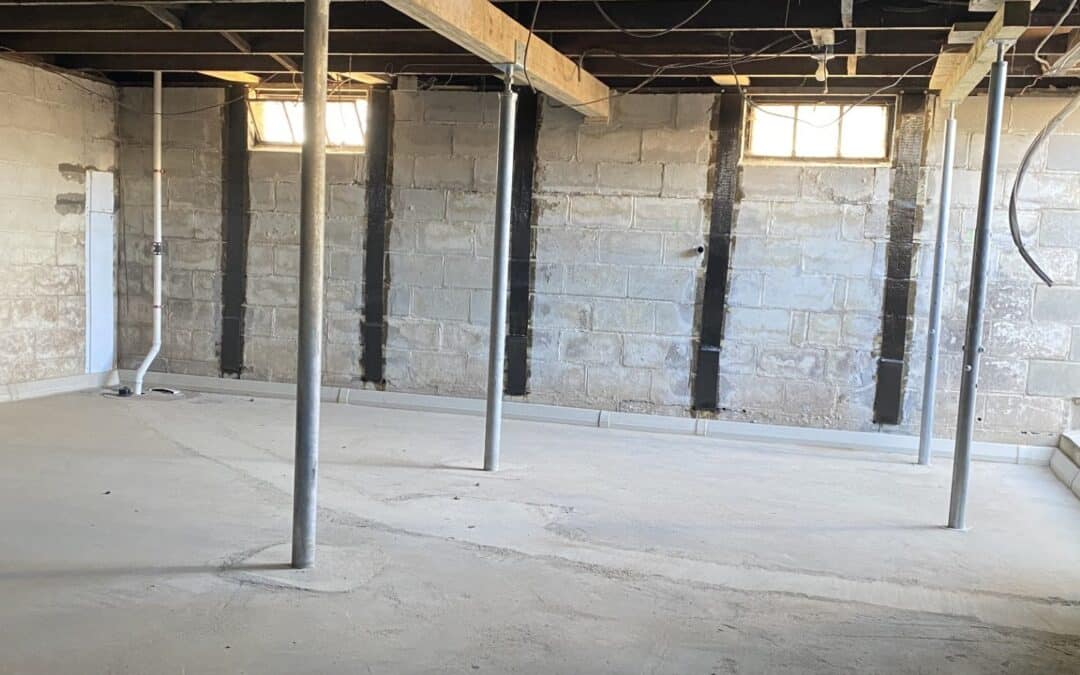
Wall Anchors, Braces, Carbon Fiber, and Drainage Solutions
Common solutions include:
- Wall anchors (tiebacks) to resist inward pressure
- Steel braces for reinforcement
- Carbon fiber straps for certain wall types/conditions
- Drainage improvements (often paired with reinforcement)
Your best long-term result usually comes from combining structural support with water management—because lowering pressure reduces the risk of future movement.
FAQs
1: Are Bowing Walls Always Dangerous?
Not always immediately, but bowing can worsen if pressure continues. Visible movement, horizontal cracking, or increasing bow depth should be evaluated.
2: What’s The Most Common Cause Homeowners Can Actually Fix Fast?
Water control: gutters, downspout extensions, and grading improvements can reduce the wet soil conditions that increase pressure.
3: Can I Just Patch the Crack and Paint the Wall?
Patching may stop minor seepage, but it usually won’t stop the underlying pressure. Crack references commonly advise correcting drainage issues before repairing leaking cracks.
4: Why Do Cracks Often Look Horizontal In Bowing Walls?
Horizontal cracks can form when lateral pressure pushes the middle section inward, placing stress along a line. This pattern often signals the wall is being loaded sideways.
5: Does Freeze-Thaw Really Make A Difference?
Yes. Wet soil that freezes expands and can push laterally against foundation walls. Repeated cycles can contribute to cracking and movement.
Conclusion: A Calm Plan To Protect Your Home
If you’re seeing cracks, bulges, or inward movement, understanding the causes of bowing and buckling walls helps you take smart action. Start by controlling water outside (gutters, grading, downspouts), document what you see with photos and measurements, and bring in a qualified professional when movement looks active or severe. In many cases, reducing soil moisture and pressure is the turning point that helps a repair actually last.